


This Article Covers:
- What “left of boom” means
- Backup vs. disaster recovery
- The hidden business costs of downtime
- What a practical disaster recovery plan includes
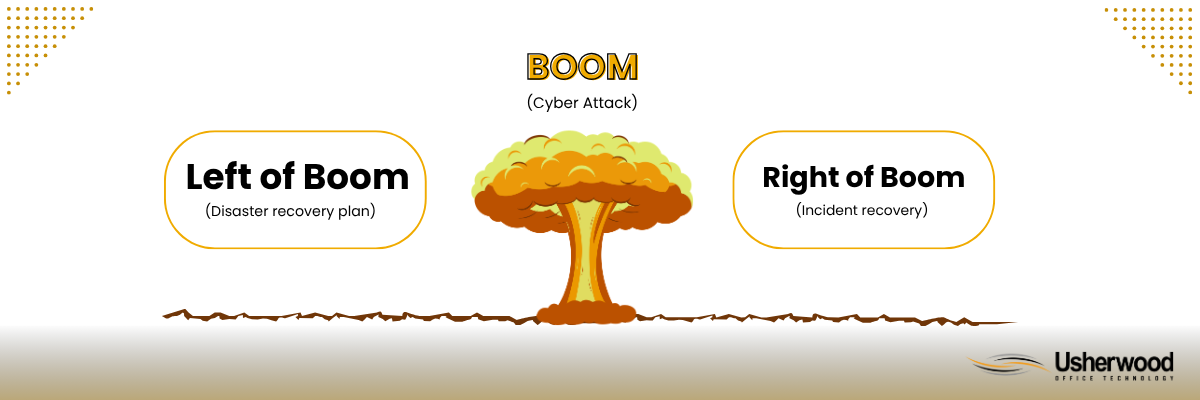
In risk planning, the term “left of boom” refers to everything an organization does before a disruptive event occurs. The “boom” is the incident itself whether that’s a cyberattack, system outage, cloud failure, or human error. Being left of boom means preparing in advance so the impact is limited and recovery (right of boom) is predictable.
Why Left of Boom Matters
Many businesses believe that having backups means they’re protected when disaster strikes. Backups play a role in disaster recovery, yet full recovery requires additional planning, processes, and systems. A backup only stores data, it doesn’t ensure systems can be restored quickly or that employees can get back to work. Without left of boom initiatives like Zero Trust security, reliable backups, and a structured disaster recovery plan, restoration efforts can be slow and chaotic.
Backup vs Disaster Recovery
What Is a Backup?
A backup is a copy of your data stored somewhere else. That could be in the cloud, on an external system, or with a third‑party provider. This leads to a very common misconception: “We have cloud backups, so we’re covered if there is ever a cyber-attack.”
Cloud backup and disaster recovery are not the same thing. Cloud backups store data, but they do not account for the infrastructure, system dependencies, identity services, and recovery sequencing required to restore full business operations. Without a defined and tested disaster recovery plan organizations often find that having backups does not translate into being able to recover quickly or effectively.
What Is Disaster Recovery?
Disaster recovery is a documented and tested plan for restoring systems, data, and access after an unexpected disruption. It goes beyond storing information and focuses on getting the business back to normal. Backups are essential. Disaster recovery is what makes them usable when it matters most.
Effective disaster recovery planning includes figuring out:
- How quickly systems must be restored
- Which systems and applications come back first
- Who does what during recovery
Unlike backups alone, disaster recovery includes:
- Clear processes
- Defined roles
- Testing to confirm recovery actually works
- Alignment with business priorities, not just IT systems
This is often formalized through a disaster recovery policy, which sets expectations for recovery and helps ensure consistency during high‑pressure situations.
Why Disaster Recovery Can’t Rely on One Person
Many organizations rely on a single “IT person” or small team to manage systems and recovery. While that may work day to day, it creates serious risk during a real disruption.
That’s why effective left of boom planning focuses on shared ownership. Simple tools like recovery runbooks, clearly defined roles, and tabletop exercises help ensure recovery is repeatable, documented, and understood beyond IT reducing downtime and business impact.
The Hidden Cost of Downtime during Disaster Recovery
Everyone knows cyber attacks are not cheap. The global average cost of a data breach in 2025 was 4.4M, according to IBM. While the cost of an attack is expensive, there are also many hidden costs that aren’t included in that price.
When operations stop, the business absorbs costs that are often underestimated or missed entirely, including:
- Lost revenue and delayed cash flow when billing, sales, or transactions can’t be processed
- Employee downtime and rework as teams wait for access or recreate lost work
- Missed deadlines and agreement penalties that affect customer commitments and contracts
- Compliance or regulatory exposure if systems supporting audits, reporting, or data protection are unavailable
- Increased cyber risk when recovery is rushed and controls are bypassed to “get back online”
Even short outages can lead to frustration, lost trust, and reputational damage.
Organizations with tested backup and disaster recovery processes are better positioned to restore systems safely and quickly. This reduces downtime, limits business impact, and lowers the overall risk during already high‑pressure situations.
This is why left of boom strategies and disaster recovery planning can’t be treated as a purely technical issue. Not everyone needs to know how to restore systems, but everyone should understand their role during an outage. Without clear procedures, confusion slows recovery, decisions get delayed, and downtime lasts longer than it should.
The Limits of Cyber Insurance
Some businesses assume that cyber insurance will cover the impact of a major incident, but insurance alone is not a disaster recovery strategy. While cyber insurance can help offset certain costs, such as legal fees or notification expenses, coverage is often limited and conditional.
Some of the most damaging consequences are not fully covered, including extended downtime, lost revenue, and employee productivity loss. Most importantly, brand and reputation damage cannot be insured or undone.
Cyber insurance does not restore systems, prioritize recovery, or guide decisions during an outage. Those outcomes depend on left of boom planning, including tested backups, documented recovery procedures, and clearly defined roles. Insurance works best when paired with strong disaster recovery preparation and not relied on as a safety net.
What a Practical Disaster Recovery Policy Includes
Proactive steps you can take to start planning ahead of cyber attacks are:
- Defining Recovery Time Objectives (RTO) and Recovery Point Objectives (RPO) aligned to business requirements
- Prioritizing critical systems and applications to ensure the most important services are restored first
- Regularly testing and validating recovery procedures to confirm systems can be restored within expected timeframes
- Establishing reliable data backups and clearly defining ownership for ongoing maintenance
- Clarifying roles and responsibilities for incident reporting, internal communications, client notification, and public response
- Coordinating with cyber insurance providers to understand coverage, response support, and available recovery services
Together, these elements turn backup and disaster recovery from a theory into an actionable process.
Start thinking Left of Boom
Thinking left of boom means preparing for disruption before it happens, rather than scrambling after the damage is done. Backups are a necessary foundation, but disaster recovery is what turns preparation into confidence. When backup and disaster recovery is planned, documented, and tested in advance, businesses aren’t forced to make rushed decisions under pressure.
Many organizations take a left‑of‑boom approach by aligning disaster recovery planning with cybersecurity and compliance efforts to reduce downtime, audit risk, and recovery uncertainty. Managed service providers (MSPs) like Usherwood support this proactive approach by helping businesses prepare systems, people, and processes in advance.
Usherwood offers backup disaster recovery solutions that help define recovery goals, and build tested disaster recovery policies that support long‑term business continuity. To take the first step, fill out a tech evaluation to start building your backup and recovery plan with Usherwood today.