

Flock cameras are rising in conversation becoming one of the most talked about security technologies in the US.
Supporters argue that they help recover stolen vehicles, locate missing persons, and solve crimes faster.
Critics argue they blur the line between public safety and crossing a privacy boundary.
The controversy isn't really about cameras. It's about what happens when vehicle data becomes searchable, shareable, and available across large networks.
What Are Flock Cameras?
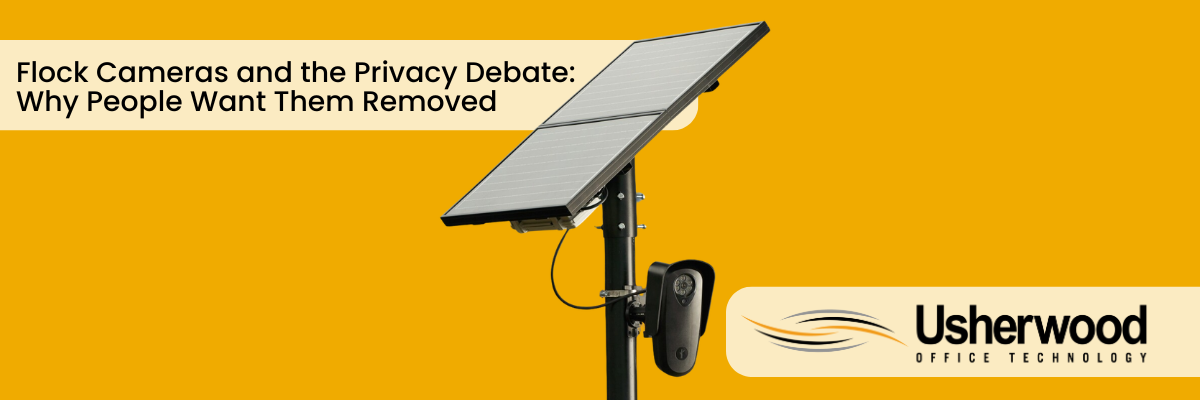
Flock Safety cameras use Automated License Plate Recognition (ALPR) technology to identify vehicles as they pass through a monitored area.
They're commonly installed in:
- Neighborhoods and HOAs
- Apartment complexes
- Shopping centers
- Business parks
- Schools
- Municipal roadways
Unlike traditional security cameras that capture video, Flock cameras are designed to identify vehicles.
When a vehicle passes a camera, the system can collect information such as:
- License plate number
- Vehicle make and model
- Vehicle color
- Vehicle type
- Roof racks
- Visible bumper stickers
- Other distinguishing features
This information creates a vehicle fingerprint, much like a digital footprint, allowing authorized users to search for vehicles based on specific characteristics.
For example, investigators may search for a red pickup truck with a roof rack near a restaurant during the day.
Why Are Flock Cameras Trending on Social Media?
Flock cameras have gained attention on social media after reports of cameras being removed, vandalized, or criticized by people who view them as a form of surveillance rather than a security tool.
News coverage and social media discussions surrounding these incidents have attracted support from others who share concerns about privacy, data collection, and the increasing presence of monitoring technologies in everyday life.
Why Are People Destroying Flock Cameras?
The reason people are destroying them is out of spite. Worries lie around connected camera networks collecting more information than people realize. For them, the concern is less about a single camera and more about the feeling that their movements can be tracked, recorded, and searched without their knowledge. They believe there should be clear boundaries around who can see where they've been and how that information is used.
Why Are People Against Flock Cameras?
1. Vehicle Tracking
One of the biggest concerns is that Flock cameras can create records of where vehicles have been seen over time. Lots feel that the cameras are an invasion of privacy or a way to track people, while supporters argue it helps investigators recover stolen vehicles and solve crimes more quickly.
2. Data Sharing
Another concern is who can access the information. Many residents want transparency around which agencies can view the data, how it's shared, and what safeguards exist to prevent misuse.
There have been cases where people with authorized access use the camera footage for an improper, unlawful, or highly controversial purpose. This sparks a larger debate on why these cameras are really in place and where the line of privacy is.
3. Accuracy
Like any technology, ALPR systems aren't perfect. Critics point to the risk of false alerts or misidentified vehicles, while supporters note that the technology is intended to provide investigative leads rather than definitive proof.
The Flock Debate Reflects a Bigger Data Privacy Question
The controversy surrounding Flock cameras highlights a broader challenge facing many technologies today: balancing personal privacy with the collection, protection, and responsible use of data.
Collecting information is only one part of the equation. The bigger challenge is ensuring that information is stored securely, accessed appropriately, and protected from misuse.
Have there been any reported data access issues with Flock Cameras?
There have been instances that have raised questions about data governance and oversight. For example, Mountain View, California, suspended its Flock camera program in 2026 after discovering that a statewide sharing feature had been enabled on several cameras without the city's authorization. According to public reports, this configuration allowed hundreds of agencies to conduct searches over an extended period.
Flock has also disclosed and corrected a software issue that briefly made some AI-powered PTZ camera feeds publicly accessible.
Both of these instances are examples of why strong data privacy laws and regulations must be in place for citizens safety.
Why Data Privacy Matters in Security Technology
Any security system that collects information whether it's security cameras, access control systems, visitor management software, or connected devices creates data that must be protected. In many cases, the privacy concern isn't just that data is being collected. It's whether that information could be accessed, shared, stored, or used in ways people didn't expect.
For example, organizations that collect security-related data should have clear policies around:
- Who can access information and under what circumstances
- How long records are retained before being deleted
- Whether data can be shared with third parties
- How information is protected from cyberattacks
- How access is monitored and audited
Without safeguards, this very personal information can expose people and organizations to risk.
Critics argue that technologies capable of recording where vehicles have been observed should be subject to clear oversight, auditing, and access controls. Concerns have been raised about whether existing safeguards are sufficient to prevent misuse by authorized users. As a result, the debate extends beyond data collection itself and focuses on how information is accessed, monitored, and protected.
Data Privacy and Data Security Are Not the Same Thing
Data privacy and security are closely related, but they solve different problems.
Data privacy focuses on how information is collected, used, shared, and retained. Data security focuses on preventing unauthorized access to that information.
For example, a security platform may have a legitimate reason to collect data, but organizations still need protections such as encryption, multifactor authentication, access controls, and employee training to ensure that information doesn't fall into the wrong hands.
This distinction has become increasingly important as cyberattacks continue to rise. Stolen credentials, ransomware attacks, insider threats, and unauthorized access can expose sensitive information regardless of how it was originally collected.
Trust Depends on More Than Technology
Whether the discussion is about security cameras, customer records, employee information, healthcare data, or financial documents, the same question ultimately applies: can the organization collecting the information be trusted to protect it?
Strong cybersecurity controls, transparent policies, and responsible data retention practices help build that trust. Without them, concerns about privacy grow, even when the technology itself is functioning as intended.
The conversation around Flock cameras is ultimately part of a much larger discussion taking place across industries: as organizations collect more data than ever before, people want greater visibility into who can access that information and how it will be protected.
In August 2026, Flock Safety announced several new safeguards designed to increase accountability and reduce the risk of misuse. These changes include:
- Requiring a case number for every search
- Automatic detection of unusual search activity
- Temporary account lockouts when potential misuse is identified
- Allowing municipalities to limit what types of investigations out-of-state agencies can search for
For example, a city may allow searches related to missing persons or stolen vehicles while restricting searches related to other categories of investigations.
At Usherwood, we work with organizations that are navigating the growing intersection of physical security, cybersecurity, and data privacy. Whether you're evaluating security cameras or other connected technologies, it's important to understand not only what data is being collected, but also how it's stored, protected, and managed. If you're reviewing your organization's security technology strategy, request a technology evaluation to discuss your options.