

In Short:
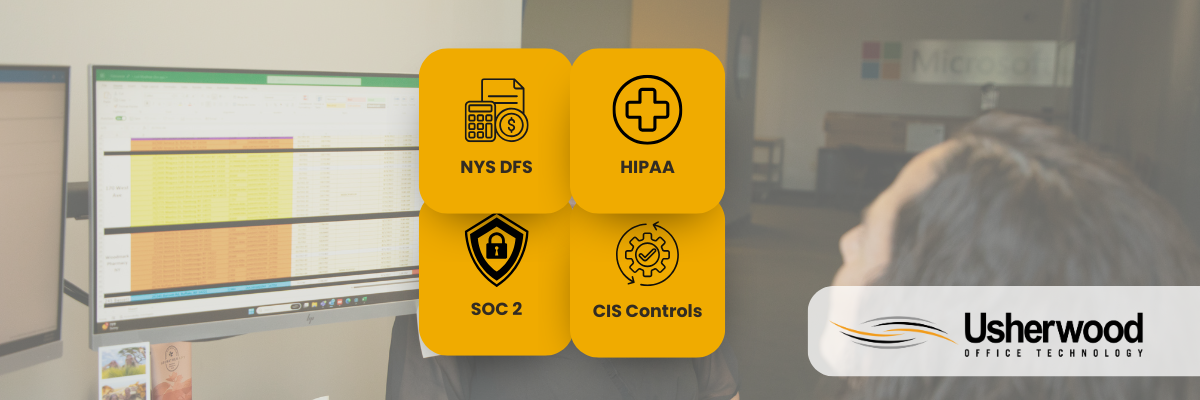
- NY DFS: Helps financial institutions implement structured cybersecurity programs to protect sensitive data, meet regulatory obligations, and reduce operational risk.
- HIPAA: Ensures healthcare organizations safeguard patient data while maintaining compliance and building trust across partners and patients.
- SOC 2 Type II: Demonstrates to clients that strong security controls are in place over time, helping organizations meet vendor expectations and stay competitive.
- CIS Controls: Provides a practical, prioritized framework to strengthen security posture, making it easier to manage risk and prepare for future compliance needs.
A Clear, Framework-by-Framework Comparison Guide
Understanding cybersecurity and compliance frameworks can feel overwhelming, especially when multiple standards overlap. Instead of comparing everything at once, this guide breaks each framework down individually so you can clearly understand what it is, who it applies to, and what’s required.
NY DFS (New York Department of Financial Services Cybersecurity Regulation)
What Does It Stand For?
NY DFS = New York Department of Financial Services
What Is It?
NYS DFS is a state-level cybersecurity regulation that requires financial institutions operating in New York to implement and maintain a formal cybersecurity program.
Who Must Comply?
-
NY financial services companies
- Banks
- Insurance companies
- Lenders
- Financial advisors and brokers
Is It Mandatory?
Yes, NY DFS is a legally enforceable regulation.
Regular Audit Requirements
-
Annual self-certification of compliance submitted to NY DFS
- Subject to regulatory oversight and examinations
Audit Frequency
-
Annually (certification)
- Additional reviews may occur during investigations or regulatory exams
Evidence Required
- Security controls documentation
- Written cybersecurity policies
- Proof of compliance certifications
Policies & Governance
- Written cybersecurity policy approved by leadership
- Governance (CISO or equivalent oversight)
- Incident response plan
Technical Controls
- MFA
- Asset inventory and management
- Access control and privileged account management
- Continuous monitoring / logging
- Vulnerability management and malware protections
HIPAA
What Does It Stand For?
HIPAA = Health Insurance Portability and Accountability Act
What Is It?
HIPAA is a federal law that sets standards for protecting sensitive patient health information (PHI and ePHI).
Who Must Comply?
- Healthcare providers
- Health plans
- Healthcare clearinghouses
- Business Associates (any vendor handling patient data)
Is It Mandatory?
Yes, HIPAA is mandatory, it is a federal law with significant penalties for non-compliance.
Regular Audit Requirements
- Overseen by the Office for Civil Rights (OCR)
- Audits are:
- Periodic
- Triggered by incidents (e.g., data breaches)
Audit Frequency
- No fixed schedule
-
Event-driven and ongoing oversight
Evidence Required
- Risk assessments and risk analysis documentation
- Security and privacy policies
- Audit logs and activity tracking
- Workforce training records
- Breach notification documentation
- Business Associate Agreements (BAAs)
Policies & Governance
- Documented safeguards for ePHI protection
- Workforce training and security awareness
- Incident response and breach notification procedures
Technical Controls
- Access control and user authentication
- Audit logging and activity monitoring
- Encryption / protection of ePHI
- Device and media controls
- Backup and disaster recovery
SOC 2 Type II
What Does It Stand For?
SOC 2 = System and Organization Controls 2
Type II = Controls are tested over time (not just at a single point)
What Is It?
SOC Type II is an independent third-party audit that evaluates how well your organization protects customer data over a defined period.
Who Must Comply?
- Not legally required for any specific industry
- Common for:
- SaaS companies
- Technology providers
- Service organizations handling customer data
Is It Mandatory?
NO, SOC Type II is not mandatory, but often required to win enterprise deals or pass vendor security reviews
Regular Audit Requirements
- Conducted by an independent CPA firm
- Includes:
- Review of policies and procedures
- Testing of security controls over time
- Validation of control effectiveness
Audit Frequency
- Typically annual
Evidence Required
- Continuous evidence of control operation
- Logs, screenshots, and system records
- Formal system description
- Risk management documentation
- Incident response testing records
- Access reviews and change management documentation
SOC 2 requires ongoing evidence collection, not just one-time preparation.
Policies & Governance
- Formal security policies and procedures
- Incident response
- Change management
Technical Controls
- Access control and MFA
- Logging and monitoring
- Vulnerability management
- Encryption
- Change tracking and system integrity
- Security awareness training
CIS Controls (Critical Security Controls)
What Does It Stand For?
CIS = Center for Internet Security
What Is It?
CIS Controls is a best practice cybersecurity framework that provides prioritized actions (Controls) to help organizations improve their security posture.
It includes implementation groups:
- IG1: Basic cyber hygiene
- IG2: Intermediate security maturity
Who Must Comply?
- No one is required to comply
- Used by:
- Small to mid-sized businesses
- Enterprises improving security maturity
- Organizations preparing for audits (SOC 2, HIPAA, etc.)
Is It Mandatory?
No, CIS Controls are not mandatory they are completely voluntary.
Regular Audit Requirements
- No formal audits required
- Typically self-assessed
Audit Frequency
-
None required
-
Organizations review progress internally as needed
Evidence Required
- Internal tracking of:
- Asset inventory
- Security controls implementation
- Risk management activities
- Security awareness training
- Incident response readiness
Policies & Governance
- Asset management policies
- Access control and account management
- Incident response procedures
- Change management
- Security awareness training
Technical Controls
- Asset inventory (hardware/software)
- Secure configurations and patching
- MFA and identity management
- Logging and monitoring
- Endpoint protection and network security
- Data protection and encryption
NY DFS vs HIPAA vs SOC 2 Type II vs CIS Controls
|
Category |
NY DFS |
HIPAA |
SOC 2 Type II |
CIS Controls |
|
Type |
Regulation |
Federal Law |
Independent Audit |
Best Practice Framework |
|
Mandatory |
Yes |
Yes |
No |
No |
|
Primary Focus |
Financial cybersecurity |
Patient data protection |
Trust & assurance |
Security maturity |
|
Audit Style |
Regulator oversight |
OCR audits |
CPA audit |
Self-assessed |
|
Audit Frequency |
Annual |
Event-driven |
Annual |
None |
|
Evidence Level |
Moderate–High |
High |
Very High (continuous) |
Flexible |
Looking to obtain one of the security frameworks above? Usherwood offers compliance services designed to help you meet regulated frameworks. To learn more about how we can support your organization, fill out a technology evaluation to get started.